
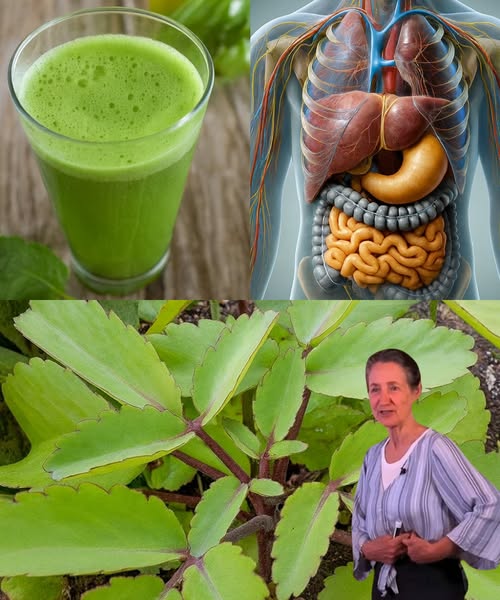
Imagine a plant so extraordinary that it grows tiny versions of itself along its leaves, ready to sprout into new life at a moment’s notice. A plant that not only thrives in harsh conditions but has been cherished for centuries across the globe for its remarkable healing powers. Meet Kalanchoe pinnata, the succulent wonder known as the Miracle Leaf, Life Plant, or Cathedral Bells. This botanical marvel, native to Madagascar, isn’t just a pretty face in your garden—it’s a powerhouse of medicinal potential and a symbol of resilience. Ready to uncover the secrets of this captivating plant? Let’s dive into its world and discover why it’s stealing hearts and healing bodies worldwide.
🌱 A Plant That Defies the Ordinary
Kalanchoe pinnata is no ordinary houseplant. This succulent perennial stands tall at about 1 meter (39 inches), with fleshy, cylindrical stems that blush with a reddish hue when young. Its thick, elliptical leaves, often edged with a vibrant red, are the real showstoppers. Why? Because they’re adorned with miniature plantlets along their scalloped margins, each one capable of dropping off and rooting to form a new plant. This unique ability to self-propagate has earned it names like “Mother of Thousands” and “Life Plant.” It’s as if the plant is determined to spread its magic far and wide.
Beyond its reproductive wizardry, Kalanchoe pinnata boasts bell-shaped flowers that dangle gracefully in clusters, earning it the nickname “Cathedral Bells.” These blooms, often greenish-pink or reddish, add a touch of elegance to its rugged charm. Whether you’re a seasoned gardener or a curious beginner, this plant’s ability to thrive with minimal care makes it a must-have for any collection.
🌍 A Global Journey from Madagascar
Native to the sun-drenched landscapes of Madagascar, Kalanchoe pinnata has traveled far beyond its island home. It now flourishes in tropical and subtropical regions across Asia, Africa, Australia, the Americas, and even the Pacific Islands. From the rocky slopes of Hawaii to the lush forests of Brazil, this plant has adapted to diverse climates, from sea level to elevations of 2,600 meters (8,500 feet). Its resilience is unmatched, thriving in dry deciduous forests, montane regions, and even disturbed urban landscapes.
However, this adaptability comes with a caveat. In places like Hawaii and the Galapagos, Kalanchoe pinnata is considered an invasive species due to its rapid spread. Its plantlets easily take root, creating dense colonies that can outcompete native flora. Yet, this same trait makes it a beloved garden plant, cherished for its ability to multiply effortlessly and bring life to any space.
💊 A Healing Powerhouse with Ancient Roots
For centuries, Kalanchoe pinnata has been a cornerstone of traditional medicine across cultures. Its leaves, brimming with bioactive compounds like flavonoids, phenolic acids, and bufadienolides, are the key to its therapeutic prowess. From the Amazon to the Philippines, communities have harnessed its powers to treat a wide range of ailments, earning it the title “Miracle Leaf.”
Anti-Inflammatory Marvel
ADVERTISEMENT
