
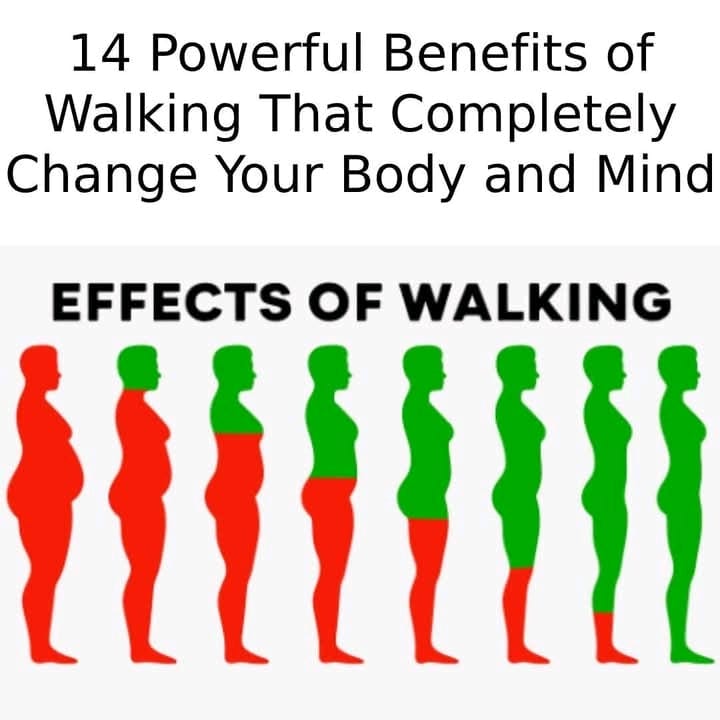
14. Builds & Preserves Lean Muscle (Especially Legs & Glutes)
Repeated contractions tone and hypertrophy type I (endurance) fibers in calves, quadriceps, hamstrings, and gluteus maximus/minimus. Walking helps prevent sarcopenia (age-related muscle loss of 3–8% per decade after 30) — regular walkers in their 60s–80s often maintain leg strength and muscle mass closer to younger sedentary adults.
15. Supports Gut Health & Regular Digestion
Rhythmic movement stimulates peristalsis (gut contractions), increases intestinal blood flow, reduces transit time, lowers bloating/constipation risk, and positively shifts gut microbiome diversity (more beneficial bacteria). Many walkers notice more regular, comfortable bowel movements within 2–4 weeks.
16. Increases Daily Energy & Reduces Fatigue
Improves mitochondrial biogenesis and efficiency in muscle cells, enhances oxygen delivery via better capillary networks, balances cortisol/insulin/growth hormone. Paradoxically, consistent walkers report feeling more energized throughout the day — less afternoon crashes and higher sustained vitality.
17. Improves Balance, Coordination & Fall Prevention
Strengthens ankle stabilizers, hip abductors, core, and proprioceptive feedback loops. Large trials show regular walking reduces fall risk by 20–40% in older adults — critical for maintaining independence, avoiding fractures, and preserving quality of life.
18. Extends Lifespan & Reduces All-Cause Mortality Risk
Prospective cohorts and meta-analyses consistently show ~150–300 min/week moderate walking linked to 20–40% lower all-cause mortality risk, with some models estimating 3–7 additional years of life expectancy. Walking ranks among the strongest modifiable lifestyle factors for longevity — comparable to quitting smoking in impact for many people.
19. Boosts Confidence, Self-Esteem & Overall Quality of Life
Cumulative effects — better body composition, higher energy, deeper sleep, less pain/stress, sharper cognition, stronger immunity — create a powerful upward spiral. Walkers frequently report improved self-image, greater emotional resilience, sense of accomplishment, and higher overall life satisfaction scores in long-term surveys.
How many calories can i burn walking for 30 minutes
For a more precise breakdown, here’s a realistic table based on common body weights and paces:
- Average person (around 155–170 lbs / 70–77 kg) at a brisk pace (3.5 mph): ~150–220 calories in 30 minutes.
- Example from reliable sources: A 160–170 lb person walking briskly (3.5 mph) often burns ~150–180 calories; a 200 lb person at the same pace hits ~200–250 calories.
Walking 30 minutes a day is free, simple, flexible, and one of the most powerful daily habits for physical health, mental clarity, longevity, and happiness. It’s not about speed or distance — it’s about showing up consistently.
ADVERTISEMENT
