
Understanding Allergy Skin Prick Testing: How It Works and What to Expect
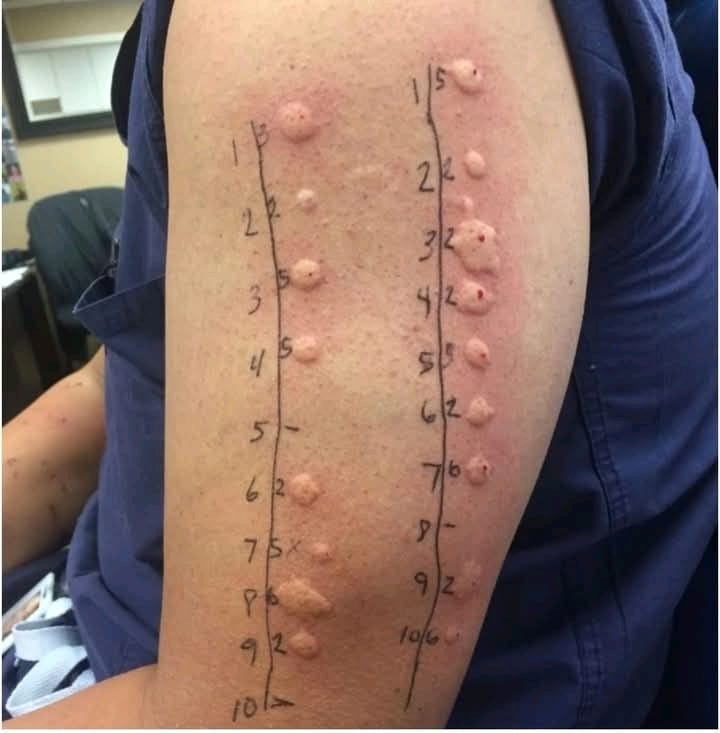
The image depicts an Allergy Skin Prick Test (also known as a scratch test or puncture test), a primary diagnostic tool used by allergists to identify specific allergic triggers.
In this test, tiny amounts of different purified allergen extracts (such as pollen, pet dander, dust mites, molds, or food proteins) are placed on the skin, typically on the forearm or upper back. The medical provider then lightly pricks or scratches the surface of the skin under each drop so the allergen can penetrate the top skin layer.
How to Read the Results
1. The Reaction (Wheal and Flare):
If a person is allergic to a tested substance, their immune system produces IgE antibodies that trigger histamine release at that spot.
This causes a raised, itchy bump called a wheal (similar to a mosquito bite) surrounded by a red area called a flare.
2. Measurement and Controls:
The allergist measures the diameter of each wheal (often recorded in millimeters, as seen in the numbered marks on the arm) to determine the severity of the reaction.
ADVERTISEMENT
