
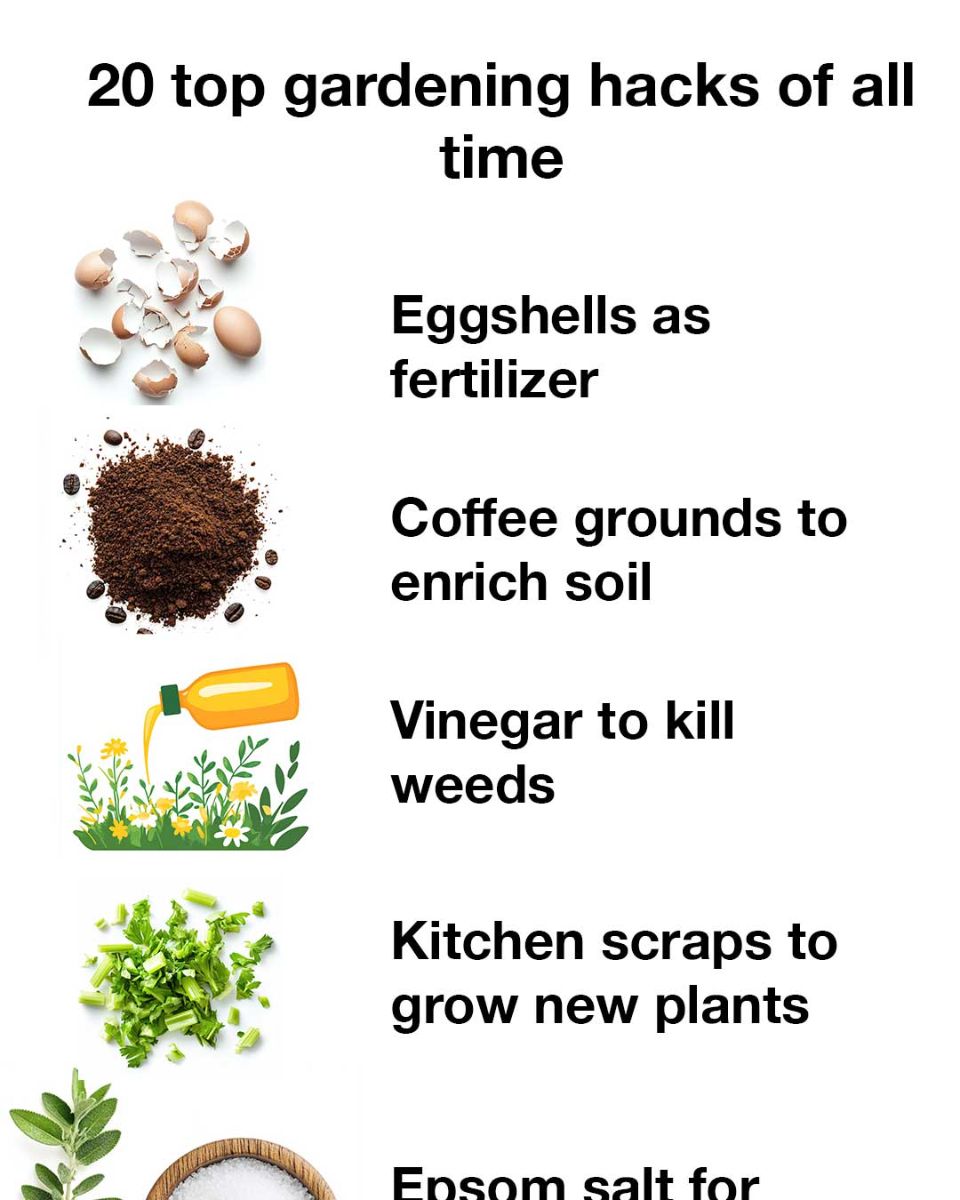
Gardening is a rewarding hobby that not only beautifies your surroundings but also provides fresh produce and a sense of accomplishment. However, it can also be challenging, especially for beginners. To make gardening more accessible and enjoyable, we have compiled a list of the top 20 gardening hacks of all time.
These tips and tricks are designed to help you maximize your garden’s potential, save time, and reduce costs, all while promoting sustainable practices. Whether you’re a seasoned gardener or just starting out, these hacks will enhance your gardening experience.
1. Using Eggshells as Natural Fertilizer
Eggshells are rich in calcium, an essential nutrient for plant growth. By crushing eggshells and incorporating them into your soil, you can provide a slow-release calcium source that helps prevent blossom end rot in tomatoes and peppers. Simply rinse the shells, let them dry, crush them into small pieces, and sprinkle them around the base of your plants.
2. Enriching Soil with Coffee Grounds
Coffee grounds are an excellent source of nitrogen, a key nutrient for plant growth. They also improve soil structure and attract beneficial earthworms. To use coffee grounds in your garden, simply sprinkle them on the soil surface or mix them into your compost pile. Be mindful not to overdo it, as too much can make the soil too acidic.
3. Vinegar as an Effective Weed Killer
Vinegar is a natural and eco-friendly alternative to chemical herbicides. Its acetic acid content makes it effective at killing weeds, especially young ones. To use vinegar as a weed killer, fill a spray bottle with white vinegar and apply it directly to the leaves of the weeds on a sunny day. Be careful to avoid spraying it on your desirable plants, as it can harm them too.
4. Boosting Plant Health with Epsom Salt
Epsom salt is a gardener’s secret weapon for promoting plant health. It contains magnesium and sulfur, which are vital for photosynthesis and nutrient absorption. Dissolve a tablespoon of Epsom salt in a gallon of water and use it to water your plants once a month. This can help improve the color and yield of your fruits and vegetables.
5. Regrowing Plants from Kitchen Scraps
ADVERTISEMENT
