
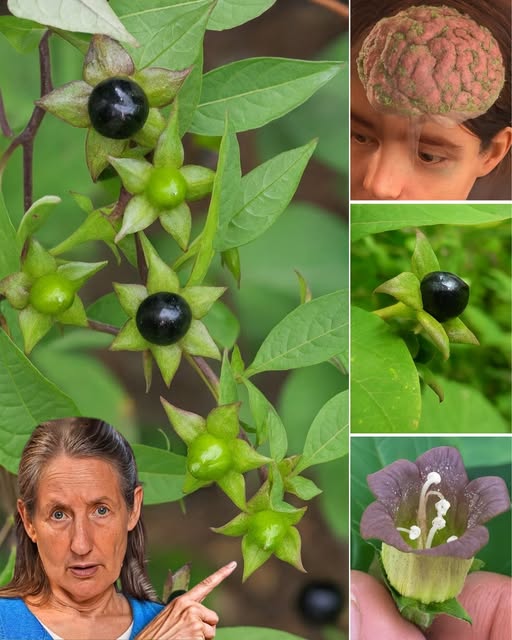
Imagine a plant so captivating it’s been whispered about in ancient legends, coveted by Renaissance beauties, and feared by even the bravest souls. Deadly Nightshade, or Atropa Belladonna, is nature’s paradox—a breathtaking beauty with a sinister edge. Its glossy black berries and delicate purple flowers hide a deadly secret: every part of this plant is laced with potent toxins that have shaped history, from poison-tipped arrows to mystical potions. Curious about this enigmatic plant? Let’s unravel its dark history, explore its toxic allure, and discover why it commands both awe and caution.
🌿 What is Deadly Nightshade?
Atropa Belladonna, commonly known as Deadly Nightshade, is a perennial from the infamous nightshade family, thriving in the wilds of Europe, North Africa, and Western Asia. Its bell-shaped, purple flowers and shiny, jet-black berries make it a visual masterpiece, but don’t be fooled—this plant is a silent killer. Every leaf, root, and berry is packed with alkaloids that can wreak havoc on the human body. Despite its dangers, its mystique has made it a staple in folklore, medicine, and even beauty rituals for centuries.
☠️ The Toxic Arsenal of Atropa Belladonna
What makes Deadly Nightshade so dangerous? Its power lies in three potent alkaloids that disrupt the body’s nervous system with alarming precision. Here’s a closer look at these chemical culprits:
Atropine: The Heart-Racing Toxin
Atropine is a neurological disruptor, capable of sending your heart into a frenzy, blurring your vision, and inducing vivid hallucinations. In high doses, it can paralyze muscles, leading to catastrophic consequences.
Scopolamine: The Mind-Bender
Known for its mind-altering effects, scopolamine has a dark history in poisons and sedatives. It can plunge users into a state of delirium, making it a favorite in ancient rituals and a feared weapon in the wrong hands.
Hyoscyamine: The Silent Killer
Hyoscyamine attacks neurological functions, causing confusion, convulsions, and, in severe cases, death. Even a small dose can tip the scales from discomfort to disaster.
ADVERTISEMENT
