
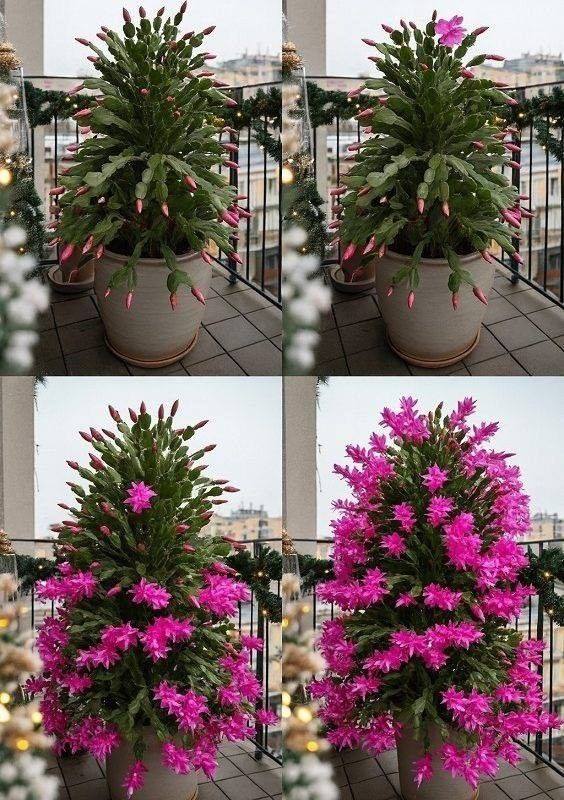
The Christmas Cactus (Schlumbergera) often frustrates indoor gardeners. It has a notorious reputation for being difficult to coax into bloom or for flowering off-schedule. Yet, these vibrant, cascading plants are remarkably cooperative once you understand their unique needs.
The key to endless winter blooms is simple: you must trick it into thinking it’s in its native Brazilian jungle by manipulating light and temperature.
I. The True Nature of the Christmas Cactus
Despite being classified as a succulent, the Christmas cactus is actually a tropical epiphyte. In nature, it grows not in desert sand, but in the humid, filtered light found clinging to trees and rocks in the Brazilian rainforest. This tropical heritage dictates its care.
Light and Temperature Needs
Light: Provide ample, bright indirect light. Direct, intense sunlight will scorch the leaves (segments).
Temperature (General): It thrives in mild conditions, ideally between 15∘C and 23∘C (59∘F and 73∘F).
Outdoor Care: It can be kept outdoors during mild summers, but must be brought inside well before any risk of frost or cold temperatures hits (ideally when temperatures drop below 10∘C).
Watering: Treat it like a tropical plant. Water the cactus generously until water drains from the bottom.
The Crucial Dry Period: Allow the top few inches of soil to completely dry out between waterings to prevent the deadly risk of root rot.
Humidity: Since it loves humidity, place the pot on a tray filled with pebbles and water. The evaporating water will create the moist micro-climate the plant craves, especially in dry homes.
Soil and Feeding
Soil: Given that they don’t grow in true soil in the wild, they prefer a well-draining potting mix formulated for succulents or cacti.
Fertilizer: Only fertilize the Christmas cactus with a balanced feed after the flowering period has finished.
II. The Secret to Guaranteeing the Bloom
The colorful pink, fuchsia, orange, or white flowers only appear after the plant has undergone a specific, simulated dormancy period of about four weeks. This is the crucial step indoor growers often miss.
The Dormancy Trigger: Cool, Dark Nights
To force the dormancy phase and encourage bud production, you must provide two specific environmental conditions:
Extended Darkness (Longer Nights):
Place the plant in total darkness for about 12 to 14 hours per day.
Need a solution? If you don’t have a naturally dark spot, simply cover the Christmas cactus with a light-proof box or a heavy cloth every evening and remove it every morning.
Cooler Temperatures:
During this dormancy month, the plant also needs cooler nighttime temperatures, ideally ranging between 10∘C and 12∘C (50∘F and 55∘F).
Protecting the Buds
Once you see small buds forming at the ends of the leaf segments, the dormancy period is over, and you can return the plant to its normal, warmer, bright location.
Crucial Warning: Christmas cacti are notorious for dropping buds if they are stressed. To prevent this:
Be Gentle: Avoid moving the plant or drastically changing its orientation.
Hydrate: Ensure regular, consistent watering.
Avoid Heat: Keep it away from drafts and direct heat sources (like radiators or vents).
By mastering this cycle—allowing a period of cool, dark dormancy—your marvelous Christmas cactus is guaranteed to produce magnificent flowers every single year, right on time for the holidays.
ADVERTISEMENT
