
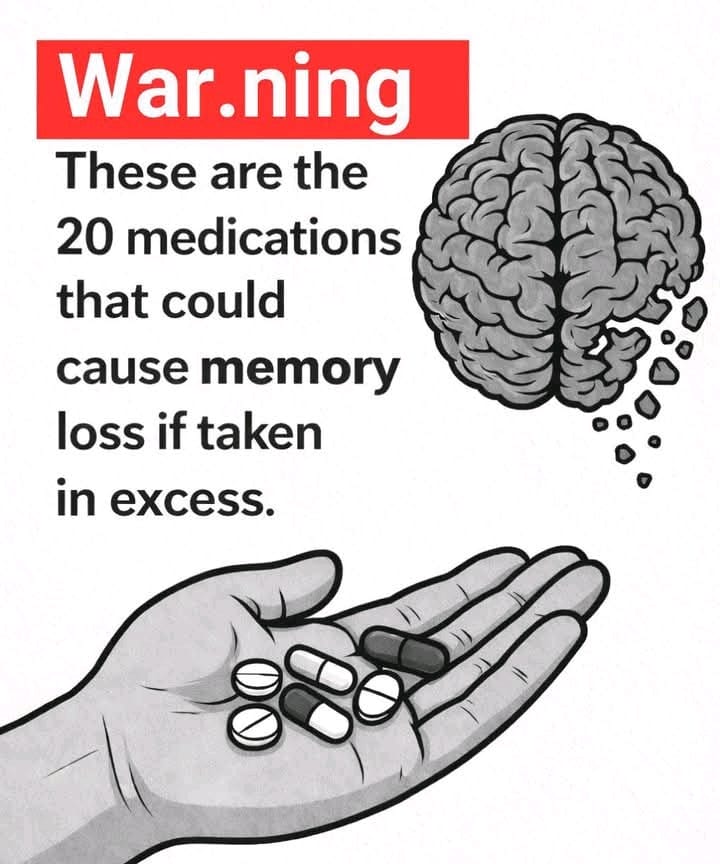
Memory loss is often associated with aging or neurological diseases, but many people are surprised to learn that certain medications can also impair memory, focus, and overall cognitive function. These effects may be temporary or, in some cases, long-lasting—especially in older adults or people taking multiple drugs at once.
Below are 20 commonly used medications or drug classes that have been linked to memory problems, along with explanations of how they may affect the brain.
1. Benzodiazepines
Medications such as those used for anxiety or insomnia slow brain activity. Long-term use can interfere with short-term memory and learning.
2. Sleeping Pills (Sedative-Hypnotics)
Sleep aids can cause next-day confusion, forgetfulness, and difficulty concentrating, particularly when used regularly.
3. Antidepressants (Certain Types)
Some older antidepressants affect acetylcholine, a chemical critical for memory and learning.
4. Antihistamines (First Generation)
Older allergy medications often cause drowsiness and mental fog because they easily cross into the brain.
5. Antipsychotic Medications
These drugs alter dopamine pathways, which can impair attention, processing speed, and memory.
ADVERTISEMENT
