
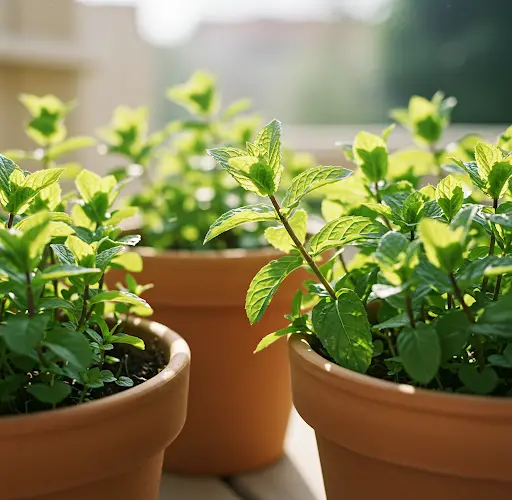
1. Start Indoors
Mint seeds are tiny and require warmth and light to germinate. Fill seed trays or small pots with a light, well-draining seed-starting mix. Moisten the soil slightly before sowing.
Sprinkle the seeds on the surface of the soil. Do not bury them deeply; instead, press them gently into the soil and cover with a very thin layer of fine soil or vermiculite. Mint seeds need light to germinate.
Keep the containers in a warm spot (around 65–70°F or 18–21°C). You can place them on a sunny windowsill or under a grow light. Mist the surface regularly to keep the soil moist but not soggy.
2. Germination and Early Growth
Mint seeds can take 10–16 days to germinate. Be patient and continue misting as needed. Once seedlings develop a few sets of true leaves, they can be thinned out to leave the strongest plants.
When the seedlings are about 2–3 inches tall and have several leaves, they’re ready to be transplanted.
3. Transplant to Larger Pots
Choose a pot that’s at least 8–12 inches wide and has good drainage holes. Fill it with a well-draining potting mix enriched with compost or organic matter.
Carefully remove the seedlings from the seed tray and plant them in the larger pot, spacing them a few inches apart. Water well after transplanting.
Caring for Mint in Pots
Sunlight
Mint prefers full sun to partial shade. It thrives in 4–6 hours of sunlight per day. In hotter climates, partial shade during the afternoon helps prevent the leaves from scorching.
Watering
Keep the soil consistently moist, especially during hot or dry weather. Mint doesn’t like to dry out completely, but avoid letting it sit in soggy soil. Ensure your pot drains well to prevent root rot.
Feeding
Mint is not a heavy feeder. You can add a diluted liquid fertilizer once a month or top up with compost occasionally to encourage lush growth.
Pruning and Maintenance
Regular harvesting and pruning will help your mint plant stay bushy and prevent it from becoming leggy. Pinch off the tips regularly to encourage branching.
If your plant starts to flower, pinch off the flower buds to extend the harvesting season. Once mint flowers, the leaves can become less flavorful.
