
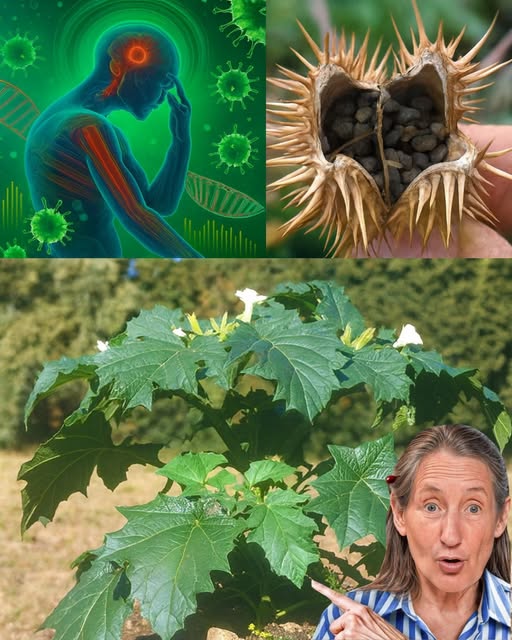
👁️ Blurred Vision and Dilated Pupils
Exposure to Datura stramonium often results in blurred vision and painfully dilated pupils, making it difficult to see clearly or tolerate bright light. These symptoms can persist for hours.
😷 Dry Mouth and Difficulty Swallowing
A hallmark of Datura poisoning is extreme dry mouth and throat, which can make swallowing difficult and increase discomfort, often signaling the onset of more severe symptoms.
🤯 Confusion and Memory Loss
The plant’s toxins disrupt cognitive function, leading to confusion, memory lapses, and an inability to think clearly. This can be particularly dangerous in situations requiring quick decision-making.
🚨 Seizures and Coma
In severe cases, Datura poisoning can cause seizures or induce a coma, especially if large amounts are ingested. These life-threatening conditions require immediate medical intervention.
💀 Risk of Death
High doses of Datura stramonium’s alkaloids can be fatal, particularly if treatment is delayed. The plant’s unpredictable alkaloid levels make it impossible to gauge a “safe” amount, amplifying the risk.
🐶 Danger to Pets and Livestock
Datura is equally toxic to animals. Pets or livestock that ingest any part of the plant—leaves, flowers, or seeds—face the same severe symptoms, often with fatal outcomes.
👶 Attractive to Children
The plant’s vibrant flowers and curious spiky seed pods can lure children, who may unknowingly touch or ingest them, leading to accidental poisoning. This makes Datura especially hazardous in family gardens.
🧤 Skin and Inhalation Risks
Even handling Datura stramonium without gloves or inhaling its particles (such as when crushing leaves) can cause irritation, dizziness, or mild systemic symptoms, as toxins can be absorbed through the skin or respiratory system.
Gardening Precautions: How to Stay Safe
Given Datura stramonium’s toxicity, growing or encountering it in your garden requires strict precautions. Whether it appears as a weed or is intentionally planted for its ornamental appeal, these essential safety measures will help you avoid accidental exposure and keep your household safe.
🧤 Wear Protective Gear
Always wear gloves, long sleeves, and eye protection when handling Datura stramonium. Its toxins can irritate skin and eyes, and direct contact should be avoided to prevent absorption or accidental ingestion.
🚫 Avoid Growing in Family Gardens
Due to its high toxicity, Datura stramonium is best avoided in gardens where children or pets are present. Its attractive flowers and seed pods can be too tempting for curious hands or paws.
🔔 Educate Your Household
Ensure everyone in your home, especially children, is aware of Datura’s dangers. Teach them to recognize its distinctive features—trumpet-shaped flowers, spiky pods, and lobed leaves—and to avoid touching it.
🗑️ Safe Removal and Disposal
If you find Datura stramonium in your garden, remove it carefully. Hand-pull young plants, ensuring the entire root is extracted to prevent regrowth. For larger plants, use tools to avoid direct contact, and dispose of all plant material in sealed bags—never compost it, as seeds can spread. Pre-emergent herbicides like flumioxazin or post-emergent options like glyphosate can also be used, but always follow label instructions.
🔍 Inspect Your Garden Regularly
Datura stramonium often grows as a weed in disturbed soils. Regularly check your garden for its telltale signs, especially in areas like flower beds or along fences, to catch it early before it spreads.
🚨 Know the Signs of Poisoning
Familiarize yourself with Datura poisoning symptoms—hallucinations, rapid heartbeat, dry mouth, and blurred vision. If you suspect exposure, seek immediate medical attention, as prompt treatment is critical for a positive outcome.
🌺 Choose Safer Alternatives
For similar aesthetic appeal without the danger, consider planting non-toxic alternatives like hibiscus or Brugmansia (angel’s trumpet), which is related but less toxic when handled properly. These plants offer stunning blooms without the life-threatening risks.
Why You Should Think Twice Before Growing Datura Stramonium
Despite its haunting beauty, Datura stramonium’s risks far outweigh its ornamental value. Its unpredictable alkaloid levels make it a hazard even for experienced gardeners, and its potential to harm children, pets, or unsuspecting visitors makes it a poor choice for most landscapes. Historically, Datura has been used in traditional medicine and spiritual rituals, but its psychoactive properties are too dangerous for casual use. Even in controlled settings, the plant’s toxicity demands strict caution, making it a plant best admired from afar.
What to Do If You Encounter Datura Stramonium
If you spot Datura stramonium in your garden or nearby, act swiftly but safely:
Identify It: Confirm its presence by noting its trumpet-shaped flowers, spiky seed pods, and lobed, foul-smelling leaves.
Remove It Safely: Use protective gear and tools to uproot the plant, ensuring no seeds are left behind to spread.
Dispose Properly: Seal all plant material in plastic bags and dispose of it in the trash, not compost.
Monitor for Regrowth: Check the area regularly, as Datura’s branched taproot can make it challenging to fully eradicate.
Seek Help if Exposed: If you, a family member, or a pet comes into contact with the plant, contact a medical professional or veterinarian immediately.
Final Thoughts: Admire, Don’t Touch
Datura stramonium is a plant of duality—its stunning flowers and intriguing history draw you in, but its deadly toxins demand respect. While it may tempt gardeners with its exotic allure, its potential to cause harm makes it a risky addition to any landscape. By understanding its 10 critical toxicity risks and following strict gardening precautions, you can protect yourself, your loved ones, and your pets from its dangers. Instead of inviting this enigmatic plant into your garden, opt for safer alternatives and let Datura stramonium remain a fascinating—but distant—marvel of nature. Stay curious, stay cautious, and keep your garden a safe haven for all.
ADVERTISEMENT
