
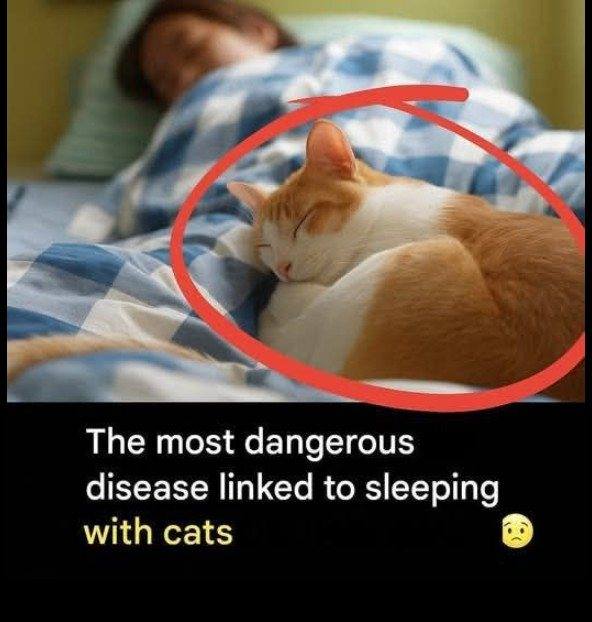
Among these, toxoplasmosis is considered the most serious, particularly for pregnant individuals and people with weakened immune systems.
What Is Toxoplasmosis?
Toxoplasmosis is an infection caused by a microscopic parasite called Toxoplasma gondii. This parasite is extremely common worldwide and can infect many warm-blooded animals, including humans.
Cats play a unique role in the parasite’s life cycle. They are the primary host, meaning the parasite can reproduce in a cat’s intestines and be shed in the cat’s feces.
How Common Is It?
It is estimated that up to one-third of the global population has been exposed to Toxoplasma gondii at some point.
Most people who are infected never develop symptoms.
Many people do not even realize they have been exposed.
Despite its prevalence, toxoplasmosis can be serious under certain circumstances.
How Sleeping with Cats Can Increase Risk
Sleeping with a cat does not automatically cause toxoplasmosis. The risk depends on how exposure occurs.
Possible ways transmission may happen include:
Contact with microscopic parasite particles carried on a cat’s fur or paws
A cat that has recently used a litter box and then walks on bedding
Touching contaminated bedding and then touching your mouth, eyes, or food
It’s important to note:
Cats usually shed the parasite only for a short period in their lifetime
Indoor cats that do not hunt and eat raw meat are much less likely to be carriers
Still, close sleeping arrangements can slightly increase exposure risk, especially if hygiene practices are poor.
Symptoms of Toxoplasmosis
For most healthy people, toxoplasmosis causes mild or no symptoms. When symptoms do appear, they may resemble a mild flu.
ADVERTISEMENT
