
3. Long-Term Health Concerns (Under Study)
Some research has explored possible associations between latent toxoplasmosis and long-term neurological or behavioral changes. While these findings are still being studied and remain controversial, they reinforce the importance of prevention and awareness.
Myths and Misconceptions About Cats and Toxoplasmosis
Myth 1: All Cats Carry Toxoplasmosis
False. Most cats never carry the parasite, especially indoor cats that eat commercial food.
Myth 2: You Can Get It Just by Touching a Cat
Unlikely. Transmission usually occurs through ingestion of contaminated material, not casual petting.
Myth 3: Pregnant People Must Get Rid of Their Cats
Absolutely false. With proper hygiene, cats can remain safely in the home during pregnancy.
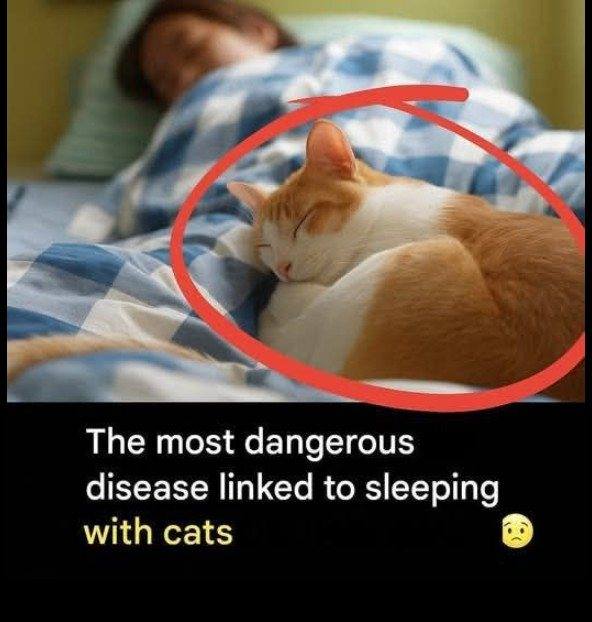
Why Sleeping with Cats Isn’t Always Risky
Many cat owners sleep with their pets without ever developing toxoplasmosis. The risk remains low when:
Cats are kept indoors
Litter boxes are cleaned daily
Proper handwashing is practiced
Cats receive regular veterinary care
Sleeping with cats is not inherently dangerous—it simply requires awareness and good habits.
Prevention Tips for Sleeping Safely with Cats
1. Practice Excellent Hand Hygiene
Wash hands after handling litter boxes
Wash hands before eating or touching your face
Use soap and warm water for at least 20 seconds
2. Keep Cats Indoors
Indoor cats are less likely to be exposed to parasites through hunting or raw prey.
3. Maintain a Clean Litter Box
Scoop daily (the parasite becomes infectious after 24–48 hours)
Use gloves if possible
Avoid litter box cleaning during pregnancy if you can delegate it
4. Wash Bedding Frequently
Wash sheets and pillowcases weekly
Use hot water to kill germs
Keep bedding clean if your cat sleeps on it
5. Don’t Let Cats Walk on Food Surfaces
Keep cats off kitchen counters and dining areas to reduce contamination risk.
6. Feed Cats Commercial Food
Avoid feeding raw or undercooked meat to cats, as this increases parasite exposure.
ADVERTISEMENT
