
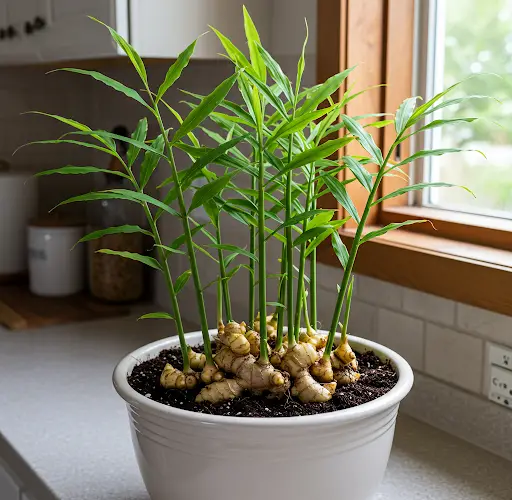
1. Choose the Right Ginger Rhizome
Select a fresh, plump ginger rhizome with multiple “eyes” (small growing buds).
Avoid dried or shriveled pieces. Organic ginger is best, as it’s not treated with growth inhibitors.
If possible, let the rhizome sit in water overnight to rehydrate it.
2. Prepare the Soil and Container
Ginger thrives in loose, rich soil that retains moisture but drains well. Create your mix using:
50% garden soil or cocopeat
30% compost or well-rotted manure
20% sand or perlite for aeration
Use a wide, shallow container because ginger spreads horizontally. Ensure the pot has drainage holes to prevent waterlogging.
3. Cut and Cure (Optional)
If your rhizome is large, you can cut it into 2–3 inch pieces, making sure each piece has at least one eye.
Let the pieces air dry for 1–2 days so the cut ends can heal. This helps prevent rot once planted.
4. Planting the Ginger
Place the rhizome pieces horizontally in the soil, with the eyes facing upward.
Cover with 1–2 inches of soil. Don’t plant too deep—ginger prefers being near the surface.
Water lightly after planting to settle the soil.
5. Care and Maintenance
Watering:
Keep the soil moist but not soggy. Water 2–3 times a week or more often in hot weather. Use mulch to retain moisture and keep the soil cool.
Sunlight:
Ginger loves indirect light or partial shade. Avoid direct harsh sunlight, which can scorch the leaves.
Feeding:
Apply organic fertilizer or compost every 3–4 weeks. Liquid compost tea or diluted seaweed extract encourages rhizome growth.
Mulching Tip:
Covering the soil with dry leaves or rice husks helps conserve moisture, prevent weeds, and maintain even soil temperature. This encourages strong root development.
Secrets to Getting More Ginger Roots
Start with healthy, active rhizomes – The more buds they have, the more shoots (and roots) will grow.
Use a wide container – Ginger grows sideways; a broader space allows more rhizomes to form.
Keep feeding regularly – Nutrient-rich soil boosts rhizome development.
Avoid overwatering – Soggy soil can rot the roots. Water just enough to keep the soil moist.
Don’t rush the harvest – Ginger takes 8–10 months to mature fully. The longer it grows, the bigger the rhizomes become.
When and How to Harvest
You can start harvesting baby ginger (young and tender) after 4–5 months. For mature, fibrous rhizomes, wait 8–10 months.
Use your hands or a small garden fork to gently lift the soil and pull up the rhizomes.
You can harvest just a portion and leave the rest to continue growing.
After harvesting, you can replant part of the ginger right away to continue the cycle.
Final Thoughts
Growing ginger at home is a rewarding experience that doesn’t require much space or effort. By using the right container, enriching the soil, and maintaining proper care, you can produce an abundant crop of fresh, flavorful ginger. The trick lies in choosing good rhizomes, giving them room to spread, and practicing patience.
Whether you’re a seasoned gardener or just getting started, this simple method will help you unlock the secret to growing ginger with many healthy, robust roots—right from the comfort of your home.
ADVERTISEMENT
