
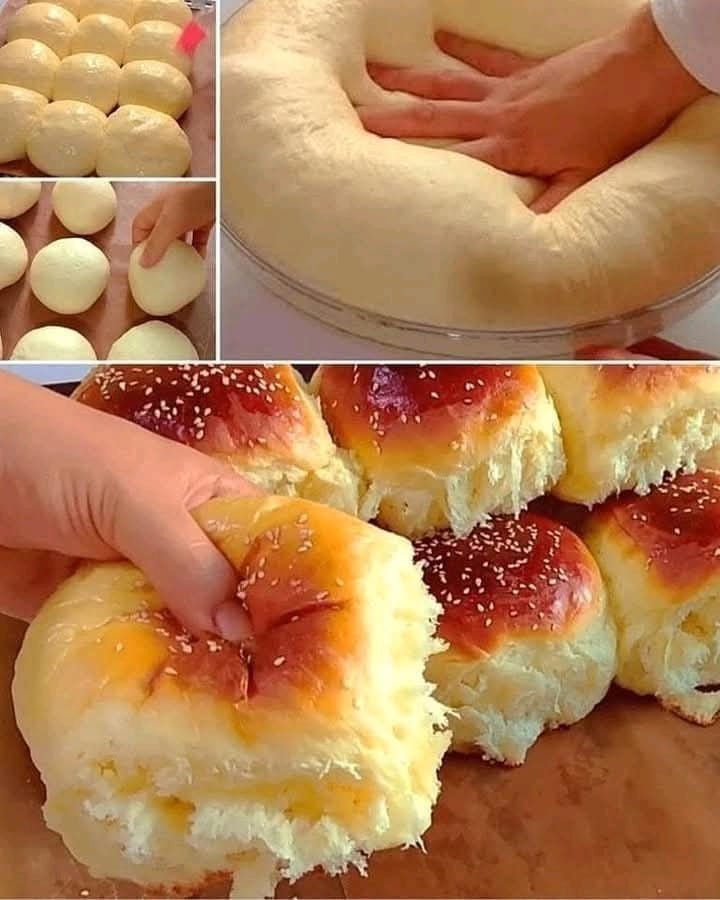
Step by Step to Make the Softest Milk Buns
Start With Frothy Yeast
The first challenge? Getting that yeast just right. I always stir mine into warm not hot milk with a pinch of sugar. After about five minutes, if I don’t see froth blooming at the surface, I toss it and start again. That froth is the gateway to fluffiness.
Mix, But Don’t Rush
Once the yeast is awake, I add it to a well in the flour mixture. Then comes the egg room temperature, always and a careful mix until the dough just comes together. Don’t overthink this step. Lumpy is fine at this stage.
Knead With Patience
This part is therapy for my hands. I sprinkle a little flour on my work surface, then knead for ten minutes. Here’s my trick: I soften the butter and add it in pieces during the kneading process. It feels like the dough doesn’t want to absorb it but trust me it will, and when it does, it transforms into silk.
Let It Rise, But Not Too Long
Overproofing is a common mistake. I oil a clean bowl, drop in the dough, and cover it. I wait until it doubles no more. That’s usually about 90 minutes in a warm kitchen. If it rises too much, the texture suffers. Keep an eye on it.
Chef’s Tips for Dough Success
Get the Best Texture Possible
- Use a kitchen scale: Weigh your ingredients for accuracy. It makes a difference.
- Room temp ingredients: Cold eggs or milk can stall your yeast activity.
- Don’t add extra flour: The dough should be tacky not sticky but don’t dry it out.
- Butter the tops: As soon as the buns come out, a quick brush with melted butter gives that extra soft sheen.
Need more bread baking guidance? My readers also love the Texas Roadhouse rolls and classic milk buns both are perfect next steps after mastering this one.
ADVERTISEMENT
